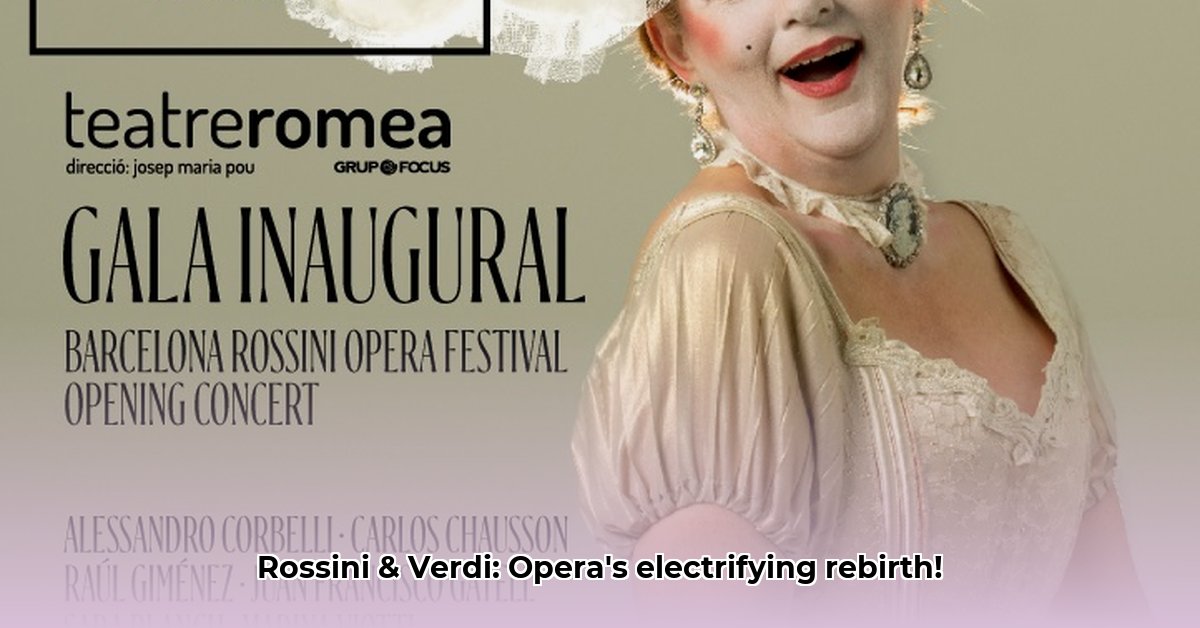
A Resurgence of Bel Canto
Eish, the world of opera, hey? It's a funny old thing. For donkey's years, Gioachino Rossini and Giuseppe Verdi seemed worlds apart. Rossini, the bel canto king, was all about those flashy, playful operas like The Barber of Seville. Verdi, on the other hand, was Mr. Grand Tragedy, his operas brimming with dramatic stories and soaring melodies. You wouldn't think they had much in common, right? But think again.
A closer look reveals surprising connections. Especially early on, Verdi borrowed heavily from Rossini's style. You can hear it in his melodies, the way he uses the chorus – a real Rossini magic sprinkled in. It's subtle, perhaps not immediately obvious, but it's there, a secret handshake between two giants. This shared lineage, often overlooked, is precisely what underpins the exciting contemporary revival of both composers' works. Why now, though? What's driving this resurgence?
It's not a single factor, but rather a fascinating confluence of elements. Firstly, we have a new generation of singers, powerhouses with the vocal chops to tackle Rossini's notoriously demanding scores. We're talking singers who hit those "high Cs" with effortless grace, notes that would leave most singers gasping for air. Their ability to conquer this challenging repertoire has ignited a fresh fascination with Rossini's music. It's as if they've cracked a secret code, bringing a whole new audience along for the ride. But it's not just the comedies. Audiences are finally embracing Rossini's serious works, operas like William Tell, Othello, and Moses in Egypt, which have long been somewhat overlooked, showcasing a much more serious and dramatic side to the composer.
Then there's the staging. Modern productions are incredibly innovative, blending traditional style with contemporary flair. Imagine a production of The Turk in Italy styled like La Dolce Vita – suddenly, Rossini's witty satire feels fresh and relevant. Even the chorus, often treated as mere background, is now central, becoming a character in itself. This close engagement with the chorus, a hallmark of both Rossini and Verdi's works, is particularly notable in Verdi's early operas, further underscoring their shared musical heritage. A recent production of Verdi's Petite Messe Solennelle in Rome, for example, showcased inventive staging, pushing boundaries and paving the way for even more daring reinterpretations.
But how did this come to be? What is the impact both composers had on each other? The link between Rossini and Verdi is not coincidental; it's a direct line of influence. Digging into Verdi's early operas reveals Rossini's imprint clearly. It's evident in Verdi's use of the chorus, a direct echo of Rossini's genius, as well as in the pacing of the music, the melodies, the way he builds dramatic tension. Even Verdi’s Petite Messe Solennelle, often considered an anomaly, reveals a fascinating interplay between Rossini's lighter touch and Verdi's dramatic intensity.
So, what's next for this Rossini-Verdi revival? It's not a simple case of dusting off old scores; it's about breathing new life into a remarkable legacy. Opera houses are already responding. More performances are planned, new productions commissioned, and training programmes are focusing on bel canto techniques. This is more than just a trend; it's a rediscovery of the power and innovation of these two great composers. This rediscovery of the shared legacy between Rossini and Verdi is not merely a historical footnote but a vibrant and ever-evolving cultural phenomenon. We can anticipate further exciting developments and collaborations, consolidating the legacy of these operatic titans.
Actionable Insights: Collaboration for a Thriving Opera Scene
Here's how different stakeholders can contribute to the ongoing success of this revival:
Opera Companies: Programme more Rossini and early Verdi works; explore innovative pairings. Long-term, commission new productions and invest heavily in training focused on bel canto techniques.
Opera Singers: Master Rossini's demanding style, exploring the nuances of both composers' works. Long-term, expand repertoires to include lesser-known roles and collaborate across compositional styles.
Opera Critics & Scholars: Research the evolution of Verdi's style, focusing on Rossini's influence. Long-term, explore the broader context of 19th-century Italian opera and widely disseminate research findings.
Opera Audiences: Attend performances, engage actively with the historical context of the music, and show support by encouraging new productions and interpretations.
This isn't just a resurgence of interest in old music; it's a fundamental shift in how we understand and appreciate opera history – a history revealing a far closer relationship between these two seemingly disparate masters than we previously realised. Ongoing research promises even further insights, leading to exciting new discoveries and reinterpretations. The future of opera, it seems, is singing with the voices of the past, present and future.